For steak lovers, achieving the perfect medium rare is an art. It’s not just about the cut of meat; it’s about hitting the right temperature to unlock a juicy, flavorful experience. Knowing the ideal temperature for medium rare steak can elevate any meal from ordinary to extraordinary.
Typically, medium rare steak is cooked to an internal temperature of 130 to 135 degrees Fahrenheit. This range ensures a warm red center while maintaining tenderness and flavor. Understanding this temperature is crucial for home cooks and grill masters alike, as it guarantees a deliciously satisfying steak every time. Whether grilling, pan-searing, or broiling, mastering this temperature opens the door to culinary success.
Understanding Medium Rare Steak
Medium rare steak represents a balance between flavor and tenderness, achieved at a precise internal temperature. Understanding this steak doneness is critical for cooks seeking optimal flavor profiles.
Definition of Medium Rare
Medium rare steak falls within the internal temperature range of 130 to 135 degrees Fahrenheit. At this level, the center retains a warm red hue, providing a juicy and flavorful experience. This doneness highlights the natural characteristics of the meat, allowing its juices to enhance the overall taste.
Visual and Textural Cues
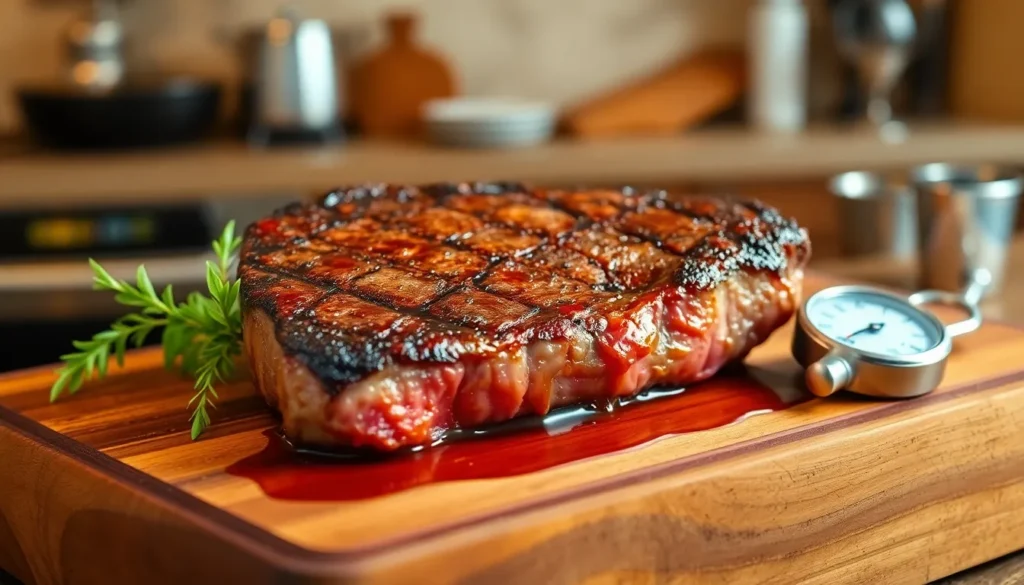
Identifying medium rare steak involves observing both visual and textural cues. The steak’s surface should display a consistent brown crust from searing, while the internal portion showcases a bright red center. When pressed, medium rare steak offers slight resistance yet retains a tender feel. Cutting into the steak reveals juices that flow, emphasizing its rich, flavorful quality.
Cooking Techniques for Medium Rare Steak

Achieving medium rare steak requires careful attention to cooking techniques. Each method provides unique benefits, enhancing flavor and texture while ensuring the steak reaches the desired internal temperature.
Grilling
Grilling offers high heat and direct flame, perfect for developing a charred crust. Preheat the grill to a high temperature, around 450 to 500 degrees Fahrenheit. Place the steak on the grill and close the lid. Cook for about 4 to 5 minutes on each side, using a meat thermometer to monitor the temperature. Aim for 130 to 135 degrees Fahrenheit for perfect medium rare. After cooking, let the steak rest for at least five minutes to allow the juices to redistribute.
Pan-Searing
Pan-searing combines high heat with a fat source, like oil or butter, to create a flavorful crust. Heat a heavy skillet over medium-high heat and add a tablespoon of oil. Once hot, place the steak in the pan, cooking for about 3 to 4 minutes per side. Utilize a meat thermometer to check for 130 to 135 degrees Fahrenheit. Optionally, add aromatics, such as garlic or herbs, during the last minute of cooking for added flavor. Allow the steak to rest for five minutes before slicing.
Sous Vide
Sous vide provides precise temperature control, ensuring evenly cooked steak. Set the water bath to 129 to 134 degrees Fahrenheit for medium rare. Season the steak and vacuum-seal it in a bag, then submerge it in the water bath for 1 to 4 hours. After sous vide cooking, sear the steak quickly on a hot grill or skillet for 1 to 2 minutes per side to develop a crust. This method guarantees a perfect medium rare steak throughout, with no risk of overcooking.
Recommended Temperature for Medium Rare
Achieving medium rare steak requires precise attention to internal temperature, ensuring optimal flavor and tenderness. The target temperature ranges from 130 to 135 degrees Fahrenheit.
Internal Temperature Guidelines
Internal temperature measurement offers the most reliable indicator of doneness.
- 130°F (54°C): At this temperature, the center remains predominantly red, presenting a juicy characteristic.
- 135°F (57°C): This upper limit maintains the warm red center while enhancing the richness of flavor.
- Thermometer Use: Utilizing an instant-read meat thermometer provides accuracy, inserting it into the thickest part of the steak for best results.
Importance of Resting Time
Resting time plays a crucial role in achieving the ideal medium rare steak.
- Juice Redistribution: Allowing the steak to rest for 5 to 10 minutes facilitates even juice distribution, enhancing flavor with every cut.
- Temperature Stabilization: Resting also permits slight carryover cooking, which can raise the steak’s internal temperature by a few degrees, bringing it closer to the perfect range.
- Texture Improvement: This brief resting period allows muscle fibers to relax, ensuring a more tender eating experience.
Tools for Accurate Temperature Measurement
Precise temperature measurement ensures perfect medium rare steak. Two main methods stand out: using a meat thermometer and employing alternative techniques.
Using a Meat Thermometer
Using a meat thermometer provides the most reliable method for checking steak doneness. Instant-read digital thermometers deliver quick and accurate readings. Insert the thermometer into the thickest part of the steak, avoiding contact with bone or fat for a true measurement. For medium rare, aim for an internal temperature of 130 to 135°F (54 to 57°C). Regular calibration of the thermometer ensures consistent accuracy, which is critical for achieving optimal results.
Alternative Methods
Alternative methods offer additional ways to gauge steak doneness without a thermometer. The finger test involves pressing the steak and comparing its firmness to different parts of one’s own hand. A medium rare steak feels similar to the area of the palm beneath the thumb when it’s relaxed. Color also serves as an indicator; a rich brown crust should contrast sharply with a bright red center. Lastly, observing the juices on the plate can provide clues—a medium rare steak releases a small amount of red juices, indicating perfect doneness.
Achieving the perfect medium rare steak is an art that hinges on understanding temperature. By aiming for an internal temperature of 130 to 135 degrees Fahrenheit, cooks can ensure a juicy and flavorful experience. Mastering this doneness not only enhances the steak’s natural qualities but also elevates the overall dining experience.
Whether using a grill, pan, or sous vide method, attention to detail will yield consistent results. The right tools and techniques make all the difference, allowing anyone to enjoy a delicious medium rare steak. With practice and precision, anyone can create a steak that impresses every time.