For many, coffee isn’t just a drink; it’s a morning ritual, a hug in a mug, and sometimes, a lifeline. But brewing that perfect cup? It can feel like an Olympic sport. Fear not, coffee lovers! Whether you’re a seasoned barista or someone who thinks a French press is just a fancy way to say “I’m running late,” mastering the art of coffee brewing can elevate your experience from “meh” to “wow.”
Essential Coffee Brewing Tips
Brewing the perfect cup of coffee requires attention to detail. Several factors play a role in achieving that desired flavor profile.
Choosing the Right Coffee Beans
Selecting high-quality coffee beans is essential for an excellent brew. Arabica beans typically deliver a sweeter and more complex flavor. Robusta beans contain more caffeine and provide a bolder taste. Consider light roasts for fruity and floral notes or dark roasts for a richer, smoky flavor. Freshness matters significantly; beans should be used within two weeks of roasting. Check the roast date on the packaging to ensure optimal flavor. Buying whole beans and grinding them just before brewing enhances aroma and taste.
Understanding Grind Size
Grind size impacts extraction and flavor. Finer grinds are generally suited for espresso preparation, while coarser grinds work well for French presses. Medium grinds are ideal for drip coffee makers. Consistency in grind size promotes uniform extraction. Using a burr grinder yields a more uniform grind compared to blade grinders. Adjusting grind size based on brewing method optimizes flavor. Experimenting with grind sizes can help identify the perfect balance for each brewing technique.
Brewing Methods

Brewing methods greatly influence the flavor and aroma of coffee. Selecting the right technique according to personal preferences can significantly enhance the coffee experience.
French Press Technique
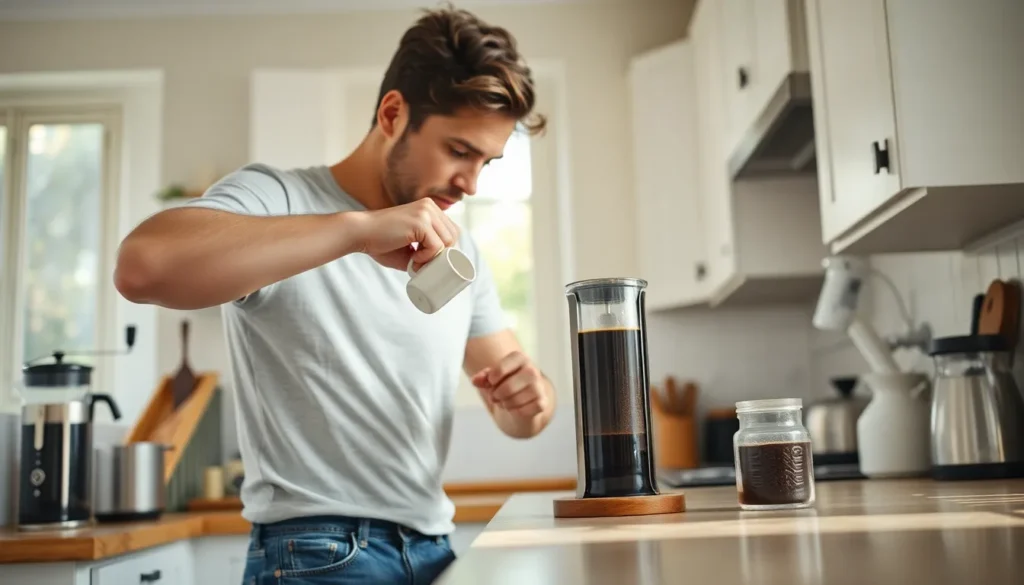
French press brewing excels in producing rich and full-bodied coffee. Use coarsely ground coffee for optimal extraction. Add roughly one ounce of coffee grounds for every two cups of water, adjusting to taste. Heat water to about 200°F for the best results. Steep coffee for four minutes before pressing the plunger down slowly. This method captures essential oils and provides a robust flavor profile.
Pour Over Basics
Pour over brewing allows for precise control over water flow and extraction time. Start with medium-fine coffee grounds, using a ratio of 1:16 for coffee to water. Heat water to about 200°F and pour it evenly over the coffee grounds in a circular motion. Bloom the coffee for 30 seconds before continuing to pour the remaining water. This technique highlights subtle flavors while providing clarity and smoothness in every cup.
Espresso Essentials
Espresso brewing requires finely ground coffee and a precise method. Utilize a coffee-to-water ratio of 1:2 for a concentrated shot. Aim for 9 bars of pressure during extraction, typically achieved with an espresso machine. Maintain a brewing time of 25-30 seconds for ideal flavor balance. This method produces a rich crema and intense coffee flavor, perfect for standalone enjoyment or as a base for other beverages.
Water Quality and Temperature
Water quality and temperature play crucial roles in brewing an exceptional cup of coffee. The right conditions enhance flavor and extraction.
Importance of Fresh Water
Fresh water impacts the taste of brewed coffee significantly. Using filtered water eliminates unwanted impurities, improving flavor clarity. Hard water, high in minerals, may lead to excessive extraction, resulting in bitter notes. Conversely, soft water can under-extract, leading to a weak taste. Always prioritize using water with a balanced mineral content to foster richness in flavor. Keeping water freshly changed further ensures optimal brewing conditions. Coffee specialists recommend using water with a pH between 6.5 and 7.5 for best results. This simple adjustment can elevate a coffee’s overall experience.
Ideal Brewing Temperature
Brewing temperature directly affects extraction rates and flavor profiles. The optimal range for brewing coffee generally falls between 195°F and 205°F (90°C to 96°C). Too low a temperature can lead to under-extraction, resulting in sour or weak coffee. Excessively high temperatures can extract unwanted bitterness. Precision is essential for achieving the perfect cup, so investing in a thermometer aids in maintaining consistency. Moreover, different brewing methods might benefit from slight adjustments in temperature. For instance, pour-over methods can excel with precise temperature control, highlighting delightful flavors. This meticulous attention to detail maximizes the overall coffee experience, allowing for personal preference to shine.
Common Mistakes to Avoid
Brewing coffee can be tricky. Several common mistakes often lead to unsatisfying results.
Over-Brewing
Over-brewing coffee creates a bitter taste. Brewing coffee for too long extracts undesirable compounds, ruining the flavor profile. Different methods require specific brewing times. For instance, a French press benefits from a steeping time of about four minutes, while pour-over methods usually need three to four minutes. Timing is essential; keeping a timer handy can help maintain consistency. Learning to recognize the right moment to stop brewing enhances overall satisfaction.
Inconsistent Measurements
Inconsistent measurements can lead to imbalanced flavors. Using a scale ensures accurate coffee-to-water ratios. For example, a typical ratio is 1:15 coffee to water, translating to about 2 tablespoons for every 6 ounces of water. Various brewing methods may call for slight adjustments, but sticking to a consistent measurement promotes uniform taste across brews. Experimenting within these guidelines can yield impressive results. Using a digital scale also simplifies measuring coffee grounds, ensuring that every cup meets expectations.
Mastering the art of coffee brewing can transform an ordinary cup into an extraordinary experience. By focusing on quality ingredients and understanding the nuances of different brewing methods, anyone can elevate their coffee ritual. It’s all about finding what works best for personal taste and preferences.
Experimenting with grind sizes water quality and brewing times can lead to delightful discoveries. With patience and practice every coffee lover can enjoy a rich flavorful cup tailored to their liking. Embracing these tips not only enhances flavor but also deepens the appreciation for this beloved beverage.