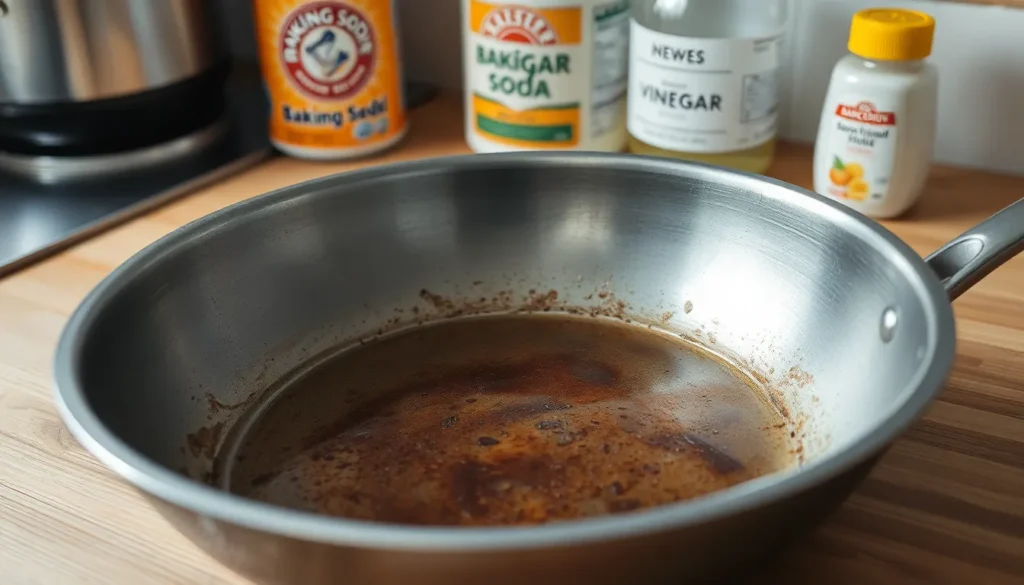
Burnt pan bottoms can turn a beloved cooking tool into a frustrating eyesore. Whether it’s from a late-night cooking mishap or a forgotten meal, those stubborn stains seem impossible to remove. But with the right techniques, anyone can restore their pans to their former glory without breaking a sweat.
Cleaning burnt pan bottoms doesn’t have to be a daunting task. Simple household items and a bit of elbow grease can work wonders. From baking soda to vinegar, these common ingredients can tackle even the toughest charred residue. With a few easy steps, it’s possible to bring back the shine and functionality of any pan, making cooking enjoyable again.
Understanding Burnt Pan Bottoms
Burnt pan bottoms often occur due to high heat and prolonged cooking times. Identifying the causes can help in selecting the right cleaning methods.
Common Causes of Burnt Residue
- High Heat Cooking: Using excessive heat during cooking can cause food to stick and burn, leading to stubborn residue.
- Overcooking Food: Leaving food unattended for too long can result in charred bits that adhere to the pan.
- Inadequate Oil or Grease: Failing to use enough cooking oil can increase the likelihood of food burning and sticking.
- Cooking with Sugars: Foods high in sugar, like sauces or certain vegetables, can caramelize and leave behind burnt remnants.
- Reactions with Non-Stick Coatings: Some non-stick pans can degrade under high heat, causing burnt spots that are difficult to clean.
Why It’s Important to Clean Them
- Hygiene: Cleaning burnt residue eliminates bacteria and pathogens, promoting safe cooking environments.
- Performance: A clean pan improves heat distribution, enhancing cooking efficiency and food quality.
- Longevity: Regular cleaning prevents damage, extending the lifespan of cookware significantly.
- Aesthetics: Maintaining a clean pan enhances the overall appearance of cookware, making it more pleasant to use.
- Taste: Old burnt residue can transfer unpleasant flavors to food, affecting the overall taste of meals.
Effective Cleaning Methods
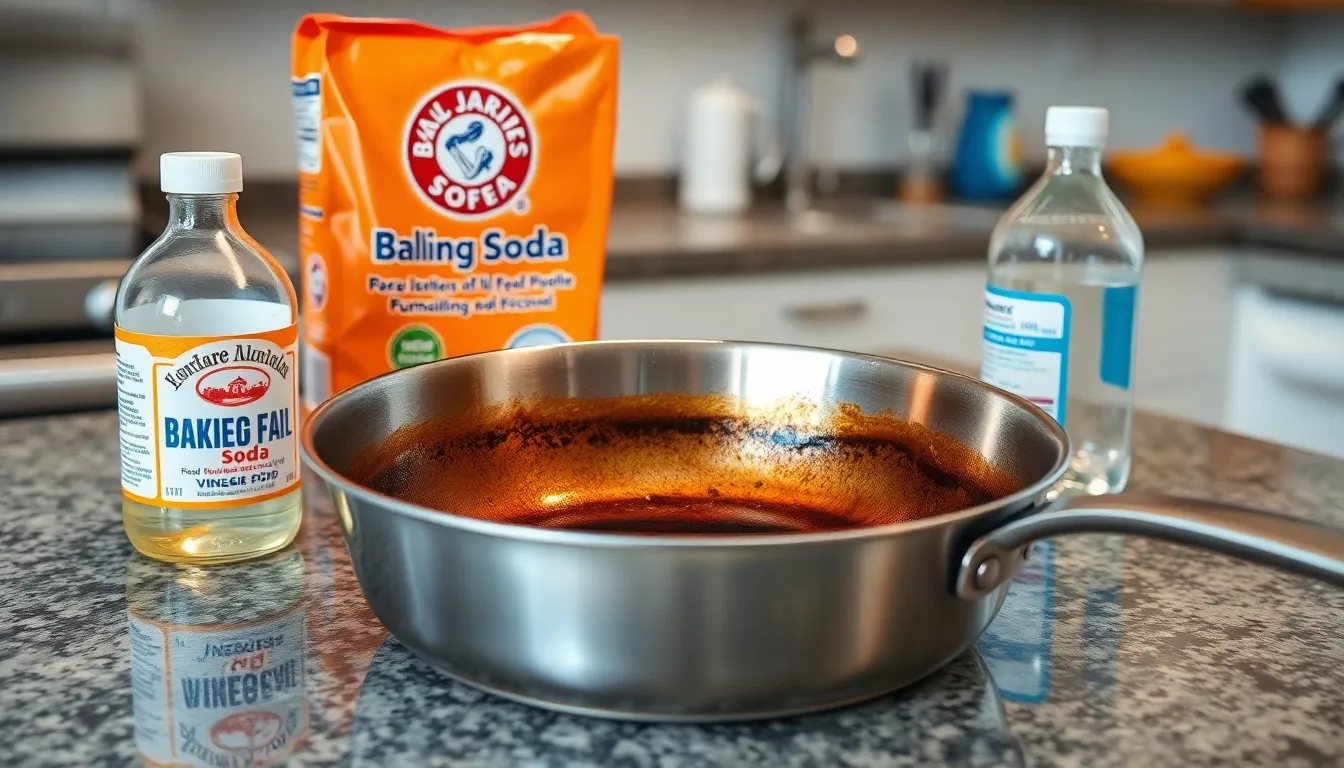
Various methods exist for cleaning burnt pan bottoms effectively. Utilizing common household items often yields excellent results without harsh chemicals.
Baking Soda and Vinegar
Baking soda and vinegar form a potent combination for tackling burnt residue. First, sprinkle a generous amount of baking soda on the affected area. Next, pour vinegar over the baking soda, creating a fizzing reaction. Allow this mixture to sit for 15 to 30 minutes, letting the chemical reaction break down the burnt particles. Afterward, scrub the pan gently with a non-abrasive sponge, rinsing it thoroughly with warm water. This method works well for stainless steel and cast iron pans.
Salt and Lemon Juice
Salt and lemon juice provide an effective, natural cleaning solution. Begin by covering the burnt area with a layer of salt. Then, squeeze fresh lemon juice over the salt, ensuring it’s thoroughly soaked. Let it set for about 10 minutes to penetrate the burnt stains. Following this, scrub the pan using the lemon halves for added abrasion, and rinse thoroughly with warm water. This method is ideal for glass and ceramic cookware.
Commercial Cleaners and Scrubs
For tough, stubborn stains, commercial cleaners or specialized scrubs can simplify the process. Select a cleaner designed specifically for cookware, and follow the manufacturer’s instructions for application. Often, these products require applying the cleaner to the burnt area and letting it sit for a specified time. Use a non-abrasive scrubber to help lift the burnt residue, then rinse thoroughly. Check product labels to ensure compatibility with specific materials before use.
Preventing Future Burns
Preventing burnt pan bottoms requires attention and specific techniques during cooking and maintaining cookware. Implementing these practices can significantly reduce the likelihood of residue build-up.
Cooking Tips to Avoid Burnt Residue
- Control heat levels: Use medium to low heat settings for most cooking tasks. High heat can quickly scorch food.
- Monitor cooking time: Set timers to avoid leaving food unattended, reducing the risk of overcooking.
- Use adequate oil: Ensure enough cooking oil or grease coats the bottom of the pan, preventing food from sticking and burning.
- Cook with care: When preparing sugary or starchy foods, add them gradually and stir frequently to prevent sticking.
- Deglaze pans: After cooking, add a bit of liquid, such as broth or water, and scrape the bottom to release any stuck food particles.
Proper Pan Care Techniques
- Clean promptly: Clean pans shortly after use to prevent residue from hardening. Hot water can make residue easier to remove.
- Avoid metal utensils: Use wooden or silicone utensils to prevent scratches on non-stick coatings.
- Season cast iron skillets: Regularly season cast iron pans to maintain a natural non-stick surface and prevent sticking.
- Store pans properly: Separate stacking pans with cloth or paper towels to avoid scratching and damage.
- Follow manufacturer guidelines: Always adhere to care instructions specific to each cookware material, ensuring longevity and optimal performance.
When to Replace Your Pans
Pans show signs of wear over time, indicating the need for replacement. Examine non-stick coatings for scratches or chips. Damaged coatings can release harmful chemicals during cooking. If food frequently sticks despite proper maintenance, consider replacing the cookware.
Inspect handles for looseness or breaks. Loose handles can pose a safety risk while cooking. Examine the base for warping or discoloration, which affects even heat distribution. If a pan is warped, it may not sit flat on the stovetop, leading to uneven cooking.
Evaluate the pan’s age as well. Most non-stick pans last about 5 to 10 years, depending on the quality. After consistent use, replace them to ensure optimal cooking performance. For stainless steel or cast iron pans, look for signs of rust or significant wear, indicating the need for replacement.
Review the performance of all cookware regularly. If cleaning burnt residues becomes increasingly challenging or ineffective, consider investing in new pans. Regular evaluations help maintain a safe and efficient cooking environment.
Cleaning burnt pan bottoms doesn’t have to be a daunting task. With the right techniques and common household items, anyone can restore their cookware to its former glory. Understanding the causes of burns and implementing preventative measures can enhance both the cooking experience and the lifespan of the pans.
Regular maintenance and timely cleaning are key to avoiding stubborn stains. By following the simple methods outlined, individuals can keep their cookware looking great and performing well. If the challenge of cleaning becomes overwhelming, it might be time to consider investing in new pans for a fresh start. A well-cared-for kitchen not only improves cooking but also enhances the overall culinary journey.